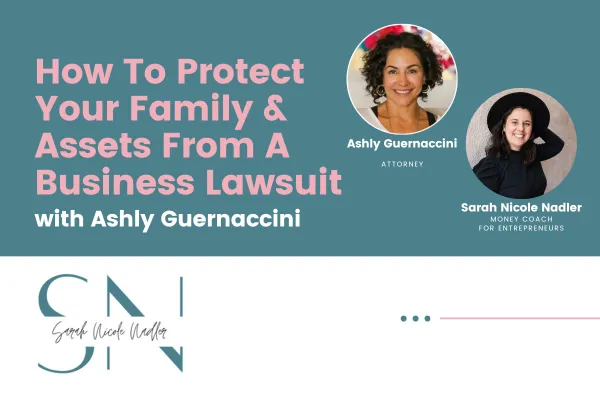
How To Protect Your Family & Assets From A Business Lawsuit
Are you protecting your assets properly?
This episode on Women, Wealth & What's Next I invited special guest Ashly Guernaccini to join us, and share with you important steps you should consider taking to protect your business in the legal arena.
I get asked by clients all the time - and I always say, "Speak to an attorney!" So this week, I did that for you ;-)
In this episode, you’ll learn:
What intellectual property is and how to spot it in your own business, from trademarks and copyrights to your proprietary methods and programs
What probate is, and how life insurance and a trust can protect your loved ones from creditors and court delays
Why choosing the right business structure with an attorney and an accountant is step one, and why a sole proprietorship can be exactly right when you’re starting out
Why you should put every agreement in writing, even with friends and family, and how contracts protect everyone involved
What a force majeure clause is and why it matters more than ever
The “would I want a jury reading this?” test for every email, text, and review response
How to respond to a negative Google review in a few simple sentences, and when to ask the platform to remove it
Why calling an attorney the moment you’re served can resolve things faster than you’d expect
With every episode of Women, Wealth & What's Next, we like to empower you with a POWERFUL free resource that goes with the episode which you can implement right away to create some of the same results, if not better, in your business.
This week, since we are talking about dotting your legal "i"s and crossing your "t"s, Ashly put together a Business Compliance Guide so you know step-by-step how to implement this strategy.
After going through this freebie you will be able to save hours of time researching the best way to legally protect your business, and know precisely what questions to ask when you speak to an attorney.
You can download it right away by clicking here
Your Business Has Assets You Can't Touch (And They Need Protection, Too!)
When we think about business assets, we usually picture money in the bank, equipment, inventory, or real estate.
But what about the things you've created?
Your brand name. Your signature methodology. Your course materials. Your inventions. Your proprietary processes.
These are examples of intellectual property, or IP, and they can be some of the most valuable assets your business owns.
Ashly explains how intellectual property can include trademarks, copyrights, patents, and trade secrets.
If you've spent years developing something unique that gives your business a competitive advantage, you don't want to discover too late that you failed to protect it.
And here's something worth remembering: intellectual property can have value beyond the income it generates today. Certain IP rights can be licensed, transferred, or sold.
The First Layer of Protection: Choosing the Right Business Structure
Should you operate as a sole proprietor? Form an LLC? Establish a corporation?
According to Ashly, there's no one-size-fits-all answer.
The right business structure depends on factors like your revenue, your industry, your liability exposure, and your long-term plans.
A brand-new entrepreneur selling books online may have very different legal needs from someone operating a company that handles hazardous chemicals.
That's why Ashly recommends consulting both an attorney and an accountant when deciding how to structure your business.
The goal isn't to create the most complicated business structure possible. It's to create the appropriate protections for the business you're actually running.
And your business structure is only the beginning.
Why Every Business Owner Needs Insurance and Written Agreements
Let's talk about one of the most common mistakes entrepreneurs make.
You start working with someone you know and trust. Maybe it's a friend, your sister, or a business partner you've known for years.
You agree on the details over coffee, shake hands, and get to work.
Why bother with a contract? You're friends!
Well, as Ashly explains, some of the most expensive business disputes begin with relationships where everyone had the best intentions.
The problem isn't necessarily that someone turns out to be dishonest.
Sometimes circumstances simply change.
Someone gets sick. A partner can't fulfill their obligations. An unexpected event makes it impossible to deliver what was promised.
And suddenly, everyone has a different understanding of what should happen next.
That's why written agreements aren't about distrusting people.
They're about protecting everyone involved, including the people you care about.
We also discuss why appropriate liability insurance matters, even for small businesses, and how a well-drafted contract can help you navigate circumstances nobody saw coming.
Remember COVID?
Businesses across the country suddenly discovered just how important a force majeure clause could be.
That's the legal term for a contract provision addressing certain extraordinary events beyond the parties' control.
It's one of many examples of why planning for the unexpected matters.
Got a Negative Google Review? Don't Make This Expensive Mistake.
Here's where our conversation gets especially practical.
Imagine opening your Google Business Profile and discovering a furious one-star review.
Maybe the customer misunderstood something. Maybe your business genuinely made a mistake. Or maybe the review contains claims that simply aren't true.
Your first instinct might be to defend yourself.
But Ashly shares a piece of advice that every business owner should remember:
"Would I want the jury reading this?"
Before you send that angry email, fire off a text message, or write a three-paragraph response to a negative review, ask yourself that question.
Because if a disagreement ever becomes a legal dispute, your written communications could become evidence.
Ashly recommends keeping public responses short, professional, and focused on acknowledging the concern.
You can demonstrate that your business cares about customer service without publicly debating the facts of the situation.
And if your business handles confidential customer information, there may be additional privacy considerations.
We also discuss how to evaluate whether a review violates a platform's content policies and when requesting removal might be appropriate.
The bottom line?
Your Google review response is not the place to win an argument. It's an opportunity to demonstrate professionalism.
What Should You Do If Someone Actually Sues Your Business?
Nobody wants to open the door and find a process server standing there.
But if it happens, Ashly has some surprisingly reassuring advice.
First, don't try to avoid being served.
Second, read the documents and contact an attorney immediately.
One of the biggest mistakes business owners make is waiting too long to get legal help, sometimes because they're convinced they can resolve the problem themselves.
Ashly explains that early attorney involvement can sometimes help resolve disputes before they become more expensive and complicated.
And there's another important lesson here:
What feels fair to you and what the law actually requires aren't always the same thing.
A good attorney's job is to help you understand that difference and make informed decisions that protect your interests.
Don't Forget to Protect Your Family, Too
Protecting your business is only one part of protecting your wealth.
What happens to your business, your assets, and your financial obligations if you pass away unexpectedly?
Ashly explains the importance of estate planning, including trusts, life insurance, and understanding the probate process.
Probate is the court-supervised process used to administer a deceased person's estate, which may involve paying creditors and distributing assets to beneficiaries.
Depending on your circumstances and state laws, appropriate estate planning documents can help simplify the process for your loved ones.
We also discuss how insurance can provide financial resources when a family or business loses someone they depend on.
Because building wealth isn't just about accumulating assets.
It's about making sure the people you love are taken care of, even when life doesn't go according to plan.
A Question I Want to Leave You With
What would your business, and the people who count on you, look like if you protected it with the same energy you put into growing it?
Because the legal side of business isn’t about expecting the worst. It’s about building something so solid that you can keep your attention on the work you love, knowing every “what if” is already handled.
If this episode helped you, DM me on Instagram (@sarahnicolenadler) and let me know your biggest takeaway!


Hey lovely! I'm Sarah Nicole Nadler
Welcome to my blog on all things profitability, money mindset and investing for business women. I'm a money coach and here to guide you to total financial freedom.
LET'S GO
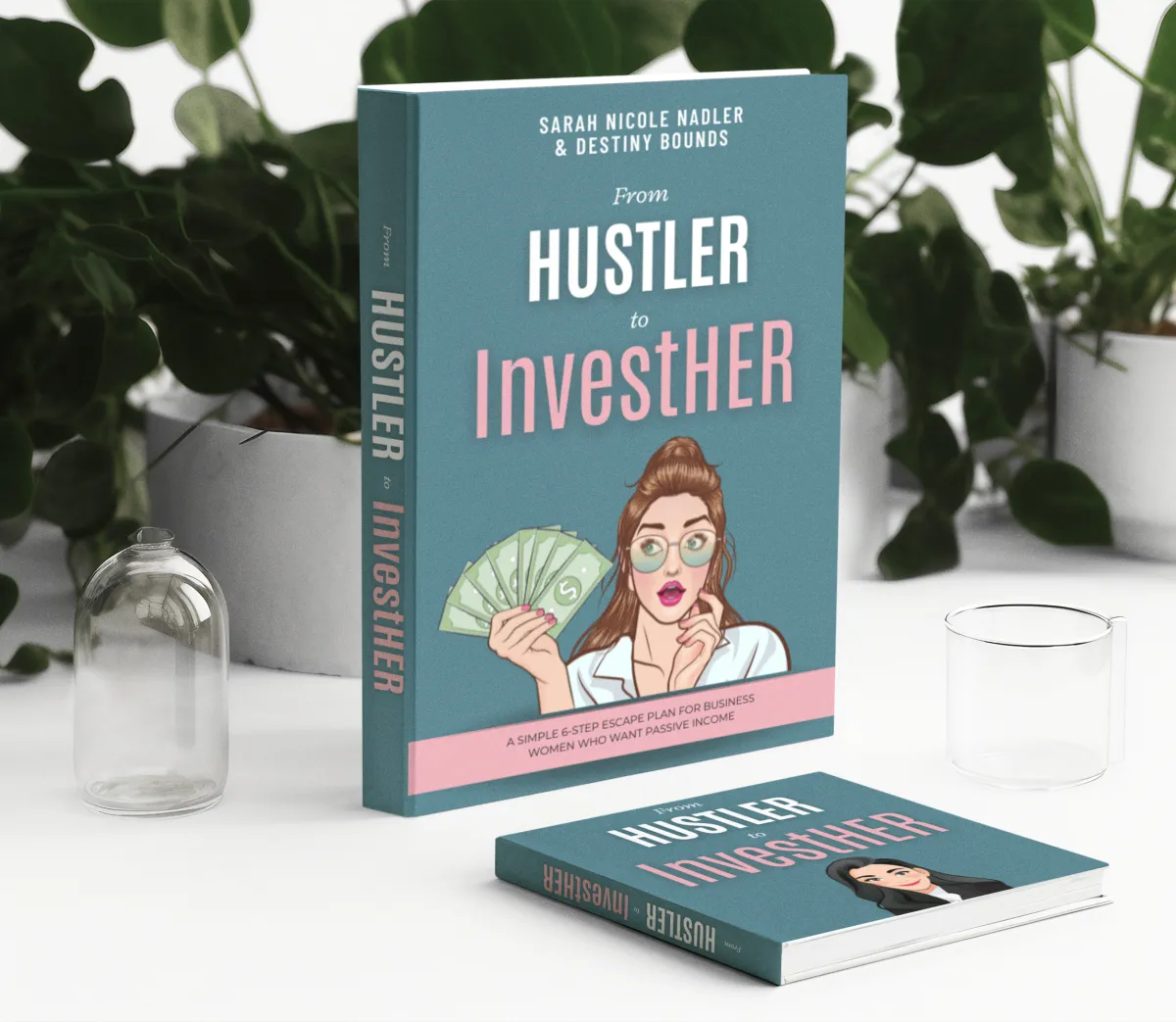
A Beginner-Friendly Class On Investing & Building Passive Income for Business Women and Entrepreneurs
Get my exclusive strategy for turning your intellectual property into passive income and growing it to 5-figures per month and beyond! FREE

Want to work with us?
The No-Fluff, No-Bro, No-Shame Wealth System for Well-Resourced Women Ready to Build, Manage, and Grow Their Own Million-Dollar Portfolio Without a Financial Advisor
COMPANY
CUSTOMER CARE
LEGAL
FOLLOW US


Copyright 2026. Sarah Nicole Nadler LLC. All Rights Reserved.