

5 Things I Learned About Business From Reading The Art of War by Sun Tzu
Being a business owner can be tough, especially when the competition is global, technology is constantly changing the way we interact and communicate, and hate speech and bigotry seem to run rampant in the online world.
If you feel like you're constantly trying to fend off competitors, battle with haters & doubters or defend your point of view, I highly recommend picking up a copy of The Art of War by Sun Tzu.
What does a book on military strategy written before the birth of Christ have to do with the modern business world?
This week on Women, Wealth, & What's Next I'm sharing with you five things I learned about business by reading The Art of War, so you can get a taste of why modern day wisdom seekers sing its praises, from a New England Patriots coach to the wolf of Wall Street.
So, as always, let’s pull this book apart!
5 Things I Learned About Business From Reading The Art of War by Sun Tzu - Episode 02
A Book On War... And Business?
I put a lot of thought into this episode because I've never done a book review on Women, Wealth & What's Next before, but this book certainly deserves its own episode!
According to Wikipedia, Sun Tzu was a Chinese general, military strategist and philosopher who lived in the Eastern Zhou period of ancient China. In East Asian culture he is well-known as a legendary historical and military figure.
His book The Art of War focuses much more on alternatives to battle, such strategy, delay tactics, the use of spies and alternatives to war itself, the making and keeping of alliances, etc.
In modern times, it continues to influence many competitive endeavors in the world, including culture, politics, sports and business, as well as modern warfare.
This book was recommended to me by a PR expert at a time when I was genuinely struggling in my career.
Like so many up-and coming entrepreneurs, I was encountering haters, debbie downers, and general bigotry and discrimination that I didn't know how to deal with. (It's shocking how many keyboard warriors you have to face on the road to success in an online business!)
Reading this book was life-changing for me.
Prior to reading it, the advice I got most commonly from family and friends on the subject of hate speech, lies being spread about me or my business, toxic people who doubted my talents, etc., was always along the lines of, "Grow a thick skin" and "don't take it personally; you're being too sensitive."
But growing a thick skin often means losing your empathy for the people and world around you! And being insensitive or uncaring toward others just doesn't work for me.
This well-meaning advice does little or nothing to put effective TOOLS and skills in the entrepreneur's hands. But The Art of War is an entire book on how to defeat one's enemies...and if you still think the haters and doubters in your life are your friends, well you might want to think again!
These same principles I learned from Sun Tzu also apply to friendly or direct competitors, or even family who have well-meaning but conflicting intentions for your life. If your spouse is unsupportive, or your parents want a different career path for you, there will be something in this book you can learn and apply to those situations.
5 Things I Learned About Business From Reading
The Art of War
So without further ado, let's take a look at the top 5 things I learned in this book, and how you can apply them to your business or life:
Tip #1: Win Without Fighting
"The supreme art of war is to subdue the enemy without fighting."
When you are faced with direct conflict, whether it's a competitor saying something negative about your business, a client telling half-truths in a Google review, or even your mother telling you how to live your life, the first instinct you have is probably to fight it. You jump up in the person's face and angrily defend yourself.
This is the wrong thing to do.
A wise general subdues the enemy without ever having to fight at all.
First, assess the opponent - particularly their emotional state. Emotional Intelligence is the ability to perceive, use, understand, manage, and handle emotions. People with high emotional intelligence can recognize their own emotions and those of others, use emotional information to guide thinking and behavior, discern between different feelings and label them appropriately, and adjust emotions to adapt to environment.
If you understand your opponent's emotional state, you can defeat them without fighting and rarely have to get confrontational.
Instead, look for win-win scenarios.
Where can you make an offer that you know your opponent will find completely irresistible? If you're not sure how, ask them questions. Do a bit of research. Look them up online.
What are their values? What does this person consider important, unimportant, obnoxious, highly desirable, etc.
Tip #2: Exploit Your Enemy's Weaknesses, Avoid Their Strengths
"If equally matched we can offer battle. If slightly inferior in numbers we can avoid the enemy, and if unequal in every way we can flee from him."
Knowing your enemy and yourself is a theme that is discussed again and again in The Art of War and is common practice in warfare. In the USA, we send spies to gather information in foreign countries, even among our allies!
In the online business world, this practice is known as "funnel hacking" your competition. Knowing what your competitors are doing, what their offers say, their email marketing, their social media strategy, can help you to attract more clients to your own business.
A common mistake business owners make is to try to look and sound like their biggest competitors...thereby losing the advantage of being different and new!
Let's take the example of a fitness coach. A major well-known competitor in your industry would be V Shred - the weight-loss and fitness program owned by Vince Sant. As a well-established online business with 12 million unique visitors per month, they have a bigger budget, name brand recognition, and a lot of other strengths that a new up-and-coming fitness coach can't compete with.
For a new fit pro who is opening up a gym or online 12-week program, it would be foolish to try to look and sound like V Shred! You can't beat them in a game of chicken.
Instead, a savvy business owner would study V Shred and other major competitors and look for weaknesses. Buy their courses, subscribe to their email list, follow Vince on social media!
Look for the holes in the fence. The niche that is underserved, or the places your competitor isn't willing to go.
In my own industry (business coaching) I studied many other business coaches before launching my programs. I worked in a corporate consulting firm selling $35k consulting packages to $7- and $8-figure wellness practitioners. I saw what they did well...and areas they were weak in.
I bought $200k worth of courses, coaching programs, etc., and discovered that most online business coaching programs had two major weaknesses:
a) many coaches want to scale soo badly they are willing to sell courses and group coaching programs that don't actually get results for the majority of people who buy them (leading to bad reviews, loads of refund requests and bad word-of-mouth),
and b) many business coaches lack confidence in their own ability to hold their clients accountable so they refuse to offer any meaningful guarantee around their services.
By offering group coaching that includes 1:1 sessions with me personally at an affordable cost, and guaranteeing results, I exploited my competitor's weaknesses and was able to avoid their strengths (which are a larger budget for paid ads and a bigger team).
Find your own unique selling point (USP) by studying your biggest competitors and positioning yourself as very different than them in a good light!
Tip #3: A Foolish Leader Sows Discontent & Misfortune In His Own Army
"There are three ways a leader can sow misfortune and discontent in his own army: (1) giving orders they cannot obey, (2) being ignorant of the conditions of the army (this causes restlessness in the soldier's minds) and (3) by employing officers of your army without ensuring their competence."
Now we come to the things I have learned on the subject of leadership from reading The Art of War. No business owner can avoid becoming a leader - you are naturally drawn into it as your influence grows. You can only choose to be good, or by ignorance and irresponsibility, to be a bad leader.
Personally, I care very much about what happens in the world around me - that includes my team, clients, listeners, the fans of my books and the community I live in as well as my family and friends.
The desire to be a good leader has lead me to study many books, lectures and seminars over the years, but this one stands out for its simplicity of wisdom.
If you would lead your team to victory over a quota, a competitor, or even another department of your own company, these are the three major mistakes you can make.
Take for example, a business owner who is planning a marketing campaign for Black Friday. Giving an order to your sales team to "double the sales from last month!" without also giving them more or better leads, additional sales tools, or a well-thought out strategy to accomplish this would only build in defeat before they even begin!
Your team, knowing full well that you set them up to be defeated, will begin to resent or dislike you and feel disloyal to the company or brand as a whole.
Similarly, if you give an order without first inspecting and gaining an understanding of the current conditions of your business, you look foolish and will lose their respect!
And third, when you promote a team member into a supervisory or leadership role, make sure you do so out of respect for their talents and genuine ability to lead, not just because you "like" them or due to their familial or other relationship with you.
Nepotism and favoritism are not smart business strategies and will cause your team to lose respect for you.
Tip #4: The Rule of 7's In Leadership
"The control of a large force is the same principle as the control of a few; it is merely a question of dividing up their numbers."
Whenever I encounter a successful business owner with a large team who is still feeling overworked and experiencing burnout, I know right away that one of two things is wrong: either a) their team is full of toxicity, inefficiency or slacking, or more likely b) they have too many direct juniors.
Every member of your team should feel that their leader personally knows and cares about them. This can only be accomplished (in a large company) by establishing strong middle managers. The most direct juniors any executive can manage is 7. Add an eighth, and you'll see burnout, confusion and chaos.
To expand your army, you need to train and select out leaders for the divisions of your organization.
Tip #5: The Most Dangerous Faults In A Leader
"The five most dangerous faults in a leader are: (a) recklessness which leads to destruction, (b) cowardice which loses respect, (c) a hasty temper which can be provoked by insults, (d) delicacy of honor which is sensitive to shame, and (e) over-solicitude for his men, which exposes him to worry and trouble."
Leadership can be a lonely and often difficult position. Some are natural and born leaders... others struggle to draw out in themselves the qualities and characteristics that we look for in a true leader.
But with all the qualities that are considered "good" to have, we have to also explore which qualities are dangerous to the army, and avoid putting people with these qualities in charge of your company or any part of it.
A general who is reckless plunges into battle without thinking. They have no strategy. This is the business owner who never has a marketing calendar in place, but is always 'shooting from the hip' when it comes to client-attraction.
This is reckless and dangerous behavior in an entrepreneur, because it doesn't provide the business with consistency of income, or the team with a reliable paycheck.
A general who is cowardly is afraid to stand against the enemy and flees when they should fight. This is the entrepreneur who gets stuck in "perfectionism" ...always dreaming, planning, redoing things and never brave enough to pull the trigger and just launch the business.
A general with a bad temper lets the enemy trick him into exposing a weakness. This is the business owner who is on Twitter all the time spewing hate speech or talking smack about others. By letting your temper get the better of you, you're leaving yourself open to attacks against your reputation that hurt your business.
A general who cannot take criticism or isn't willing to laugh at their own mistakes will put his army in an embarrassing position.
For a business, sometimes it is necessary to admit you messed up. Being honest and open about mistakes can put you in a position of strength. Owning up to things when a client gets upset, and still acting professional and caring is not a weakness.
A general who is busy "people-pleasing" will either a) burnout because he is worrying himself to death over his soldiers, or b) be so busy being nice to everybody that he is taken advantage of and loses the respect of the troops.
This is the business owner who avoids confrontation so hard that they actually cause more of it to be necessary! Or the person who cares so much for the employees that they overspend on things like bonuses, pay, benefits...and eventually go bankrupt; leaving the employees broke and jobless.
There's NOTHING wrong with caring about people, so long as you use a little common sense. Don't cause yourself added worry and trouble by being a people-pleaser.
FREE GUIDE: The Art of War — Timeless Strategies for Success
What can ancient military wisdom teach you about navigating challenges, making smarter decisions, and achieving success?
Download your FREE Art of War Guide and discover how I applySun Tzu's timeless principles to business, leadership, and everyday life. Learn how to handle conflict, recognize your strengths, choose your battles wisely, and approach challenges with confidence and strategy.
Enter your email below to get your FREE guide delivered straight to your inbox!
In Summary
I hope you found this episode helpful!
If you're interested in more tips on how to grow your business and manage a team without burning out, come visit me on my website at: www.SarahNicoleNadler.com
Click here to pick up your own copy of Sun Tzu's The Art of War or visit a bookstore near you.


Hey lovely! I'm Sarah Nicole Nadler
Welcome to my blog on all things profitability, money mindset and investing for business women. I'm a money coach and here to guide you to total financial freedom.
LET'S GO
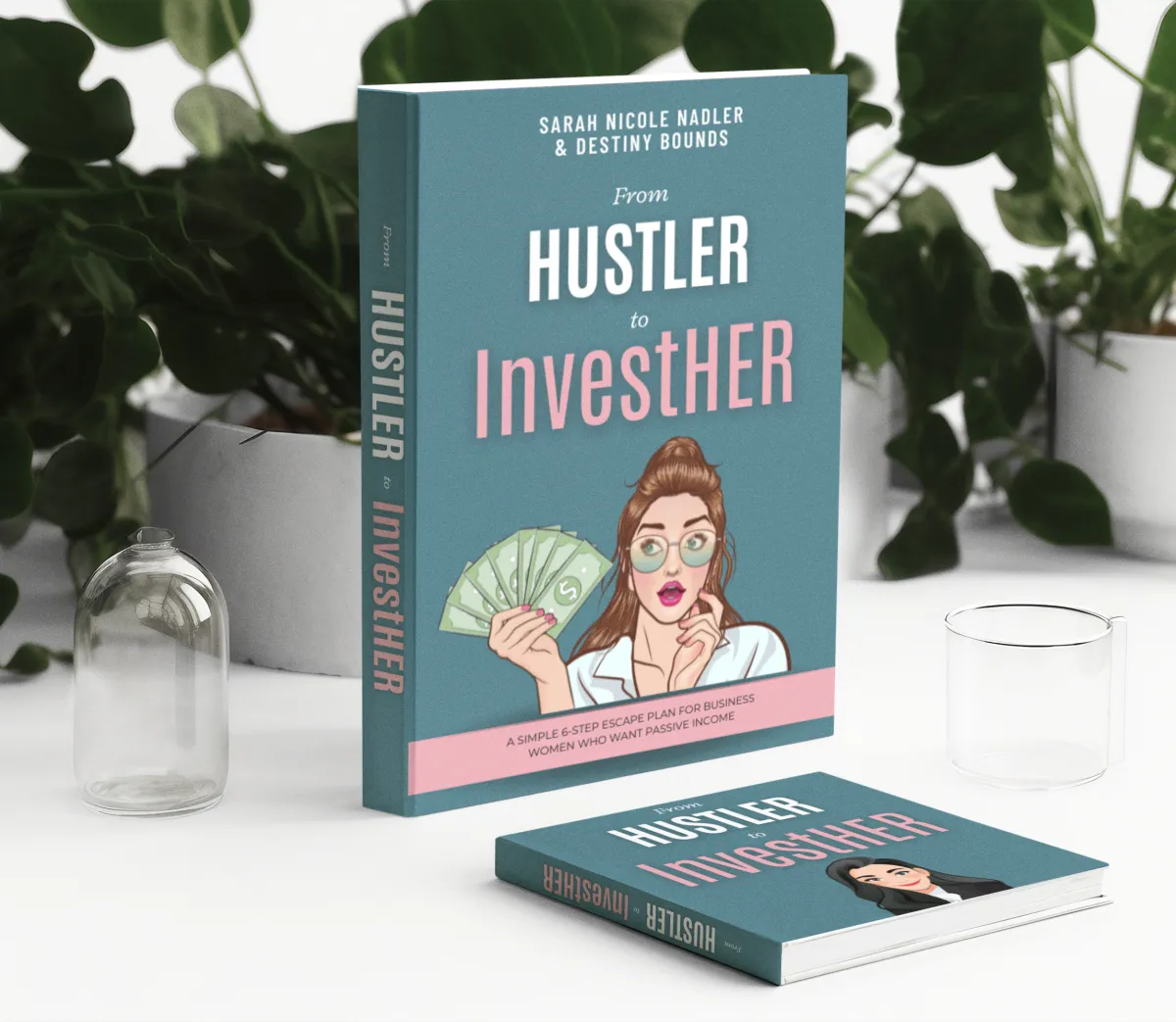
A Beginner-Friendly Class On Investing & Building Passive Income for Business Women and Entrepreneurs
Get my exclusive strategy for turning your intellectual property into passive income and growing it to 5-figures per month and beyond! FREE

Want to work with us?
The No-Fluff, No-Bro, No-Shame Wealth System for Well-Resourced Women Ready to Build, Manage, and Grow Their Own Million-Dollar Portfolio Without a Financial Advisor

COMPANY
CUSTOMER CARE
LEGAL
FOLLOW US


Copyright 2026. Sarah Nicole Nadler LLC. All Rights Reserved.